

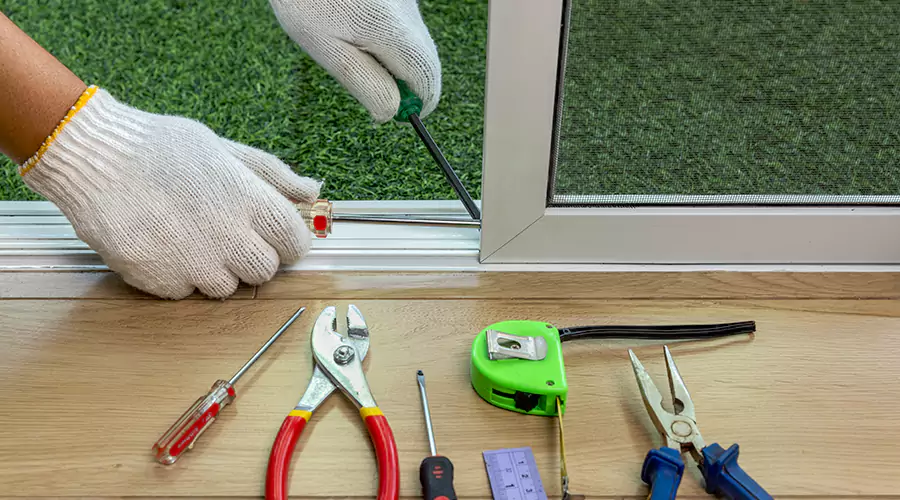

A sliding glass door should move smoothly along its track without wobbling, sticking, or shifting out of place. When a sliding door repeatedly comes off track, it can become difficult to operate and may even create safety and security concerns for your home. While this problem can be frustrating, understanding the underlying causes can help you determine the best solution before the issue worsens. In many cases, professional sliding glass door track repair may be necessary to correct underlying track damage and restore proper door operation.
In this guide, we will explore the most common reasons why sliding doors come off track, warning signs to watch for, and what homeowners can do to prevent recurring problems.
How a Sliding Door Track System Works?
Sliding doors rely on several components working together to ensure smooth movement.
The primary parts include:
- Rollers located at the bottom of the door
- Upper guides that help maintain alignment
- The bottom track that supports the door
- The door frame
- Adjustment screws that control roller height
When any of these components become damaged, worn, or misaligned, the door may begin slipping off its track.
Common Signs Your Sliding Door Is Coming Off Track
Before the door completely derails, you may notice several warning signs.
These include:
- Difficulty opening or closing the door
- Uneven movement during operation
- Grinding or scraping noises
- Visible gaps around the frame
- The door appearing crooked
- Frequent sticking or jumping while sliding
- Increased resistance when moving the door
Addressing these symptoms early can help prevent more extensive repairs.
1. Worn or Damaged Rollers
One of the most common reasons a sliding door comes off track is worn rollers.
Rollers support the weight of the door and allow it to glide smoothly along the track. Over time, these components can wear down due to constant use.
Signs of Roller Damage Include
- Cracked roller wheels
- Flat spots on the wheels
- Rusted bearings
- Broken roller assemblies
- Uneven door movement
When rollers fail, the door may become unstable and eventually slip out of alignment.
2. Bent or Damaged Track
The condition of the track plays a major role in keeping the door properly positioned.
Track Damage Can Occur From
- Heavy impacts
- Dropped objects
- Furniture movement
- Long-term wear
- Excessive pressure on the door
Common Track Problems Include
- Dents
- Bends
- Cracks
- Warped sections
- Deep grooves
Even minor track damage can cause the rollers to lose their path, increasing the risk of derailment.
3. Dirt and Debris Accumulation
Sliding door tracks can collect dirt, sand, leaves, pet hair, and other debris over time.
This buildup can:
- Block roller movement
- Create uneven surfaces
- Increase friction
- Force rollers out of position
When debris accumulates inside the track, the rollers may struggle to move correctly, eventually causing the door to jump off track.
Common Debris Found in Sliding Door Tracks
- Dust and dirt
- Outdoor sand
- Small stones
- Leaves
- Insect nests
- Pet fur
Regular cleaning helps prevent these issues.
4. Improper Roller Adjustment
Most sliding doors include adjustable rollers that help maintain proper alignment.
If the rollers are set incorrectly:
- The door may sit too high
- The door may sit too low
- One side may become uneven
- Excessive pressure may be placed on the track
Incorrect roller height can gradually cause the door to derail during normal use.
5. Loose or Damaged Hardware
Sliding doors contain several hardware components that help maintain stability.
These may include:
- Brackets
- Guides
- Fasteners
- Roller housings
- Adjustment mechanisms
Over time, hardware can become loose due to vibration and regular operation.
Loose components may allow excessive movement, increasing the likelihood of the door coming off track.
6. Frame Misalignment
A sliding door depends on a properly aligned frame for smooth operation.
Frame alignment issues may develop because of:
- Foundation settling
- Structural movement
- Moisture damage
- Age-related shifting
When the frame becomes uneven, the track may no longer remain level. This creates conditions that make derailment more likely.
Signs of Frame Misalignment
- Uneven gaps around the door
- Difficulty locking the door
- The door appears tilted
- Increased resistance during operation
Professional inspection is often needed to determine the extent of frame-related problems.
7. Excessive Force During Operation
Sliding doors are designed to move smoothly with minimal effort.
Repeatedly forcing a stuck door can cause:
- Roller damage
- Track distortion
- Hardware loosening
- Alignment problems
If the door becomes difficult to move, it is important to identify the cause rather than applying additional force.
8. Worn Track Guides
Many sliding door systems use guides that help keep the door aligned as it moves.
When guides become worn or damaged, the door may:
- Shift sideways
- Wobble during operation
- Become unstable
- Slip out of position
Replacing damaged guides can often restore proper alignment.
9. Corrosion and Rust
Moisture exposure can affect both tracks and rollers.
Rust and corrosion may cause:
- Roller seizure
- Rough track surfaces
- Structural weakening
- Increased friction
Homes located in coastal or humid environments may experience corrosion-related issues more frequently.
How to Prevent Your Sliding Door From Coming Off Track?
Keep the Track Clean
Regular cleaning helps remove debris that can interfere with roller movement.
A simple maintenance routine includes:
- Vacuum loose dirt from the track.
- Wipe the track with a damp cloth.
- Use a soft brush for stubborn debris.
- Inspect for signs of damage.
Inspect Rollers Regularly
Look for:
- Cracks
- Rust
- Flat spots
- Excessive wear
Replacing worn rollers early can prevent larger problems.
Avoid Slamming the Door
Gentle operation reduces stress on:
- Rollers
- Tracks
- Hardware
- Frame components
Schedule Routine Maintenance
Periodic inspections help identify issues before they become serious.
A professional can evaluate:
- Roller condition
- Track integrity
- Door alignment
- Hardware performance
When to Call a Professional?
Some minor maintenance tasks can be handled by homeowners, but professional service may be necessary if:
- The door repeatedly comes off track
- Track damage is visible
- Rollers are severely worn
- The frame appears misaligned
- Locking problems develop
- The door feels unsafe to operate
An experienced technician can accurately diagnose the root cause and recommend the appropriate repair.
Benefits of Prompt Repairs
Improved Door Performance
Repairs restore smooth and reliable operation.
Enhanced Safety
A properly aligned door reduces the risk of accidents and injuries.
Better Home Security
A door that stays securely on track is easier to lock and more resistant to unauthorized entry.
Reduced Long-Term Costs
Early repairs can prevent damage to:
- Rollers
- Tracks
- Frames
- Locking systems
This helps avoid more expensive repairs in the future.
Final Thoughts
A sliding door that repeatedly comes off track is usually a sign of an underlying issue that requires attention. Common causes include worn rollers, damaged tracks, debris buildup, loose hardware, improper adjustments, and frame misalignment. Identifying the source of the problem early can help prevent additional damage and restore smooth operation.
Regular maintenance, routine inspections, and timely repairs are the best ways to keep your sliding door functioning properly. If your door continues to derail despite basic maintenance, professional evaluation can help ensure the problem is corrected safely and effectively.
 Reviews
 (482)
(482)